Watch
Intro Video
This video could not start. Please try again.



This video could not start. Please try again.
This video could not start. Please try again.
Only $50.00
50% OFF
Not Ready to Join?
Free e-Book -Best Dietsof 2025
Subscribe NowThe solution to the problem of
why nearly all diets fail -
Constant Hunger
When your stomach is empty, you experience true physical hunger, which is characterized by a profound empty feeling in your stomach. This physical hunger can only be relieved by eating a sufficient quantity or volume of food.
Foods high in dietary fiber, sometimes called food bulk or roughage, like fruits, vegetables, and whole grains, have long been recognized as the most effective foods for filling your stomach, so you experience a feeling of fullness. Foods high in protein, including vegetable proteins, are also considered to be very effective foods for filling your stomach, and giving you a feeling of fulness.
The Satisfill Diet is especially high in both dietary fiber and protein, to ensure that your stomach feels comfortably full throughout the day.
Frequency of Eating: Not only is a diet high in dietary fiber and protein important in achieving a feeling of fulness, but so is the frequency of your eating. Studies have clearly shown that eating 6 smaller meals and snacks per day, rather than 3 large meals, better regulates your blood sugar levels and your metabolism, and is better at maintaining a feeling of fulness in your stomach. This is why, with the Satisfill Diet, you will be eating 6 times a day, consisting of 3 meals and 3 snacks. As a result, you will always feel some sense of fulness, and never experience the hunger pangs usually associated with dieting.
Just as compelling as the need to satisfy the physical hunger in your stomach is the need to satisfy the taste hunger in your mouth, and on your palate. You need the nourishment that comes from food to sustain your life, but you also need the pleasure and satisfaction that only comes from the taste of food. Indeed, food was made not just to be eaten, but to be tasted, savored, and enjoyed.
Knowing how critically important flavor and taste are to Appetite Fulfillment, everything has been done to make every meal and snack a great taste experience. Not only are all the foods rich in flavor and taste, but the variety of tastes is unparalleled, incorporating the full spectrum of the 7 food flavors - salt, sweet, sour, bitter, fat, spicy, and umami or savory. Our foods will be a veritable smorgasbord of flavor, and a wonderland for your taste buds to enjoy. Ultimately, you won't feel like you are on a diet at all. Instead, you will feel like you are eating the most flavorful, tasty, and delicious foods that you have ever had in your life.
Comfort Foods: Comfort foods are sometimes described as foods that people turn to during times of emotional stress. However, in the context of Appetite Fulfillment, comfort foods are -- foods that we are familiar with, foods that we are used to eating, foods that we grew up with, and foods that give us a feeling of well-being. Typically, these are foods that are part of our heritage, our culture, and the American Cuisine.
Food doesn't just reside in grocery stores, and restaurants, and in your pantry and refrigerator at home. Food is very much in your mind as well. You think about food a lot, and this is not surprising, since you eat it several times a day. Seeing food, smelling it, or just thinking about it, can trigger your appetite and desire for food, whether you are hungry or not.
There is currently a lot of focus in the diet industry on psychological hunger, often referred to as emotional eating or eating behavior. The premise is that if we can better understand emotional eating and why we binge and overeat, then our eating behavior will change. Unfortunately, this premise simply isn't valid. A fundamental tenant of behavior science is this -
A change in action needs to precede a change in behavior.
In other words, you need an action plan for eating differently first, before you can expect a change in your eating behavior. One of the greatest attributes of the Satisfill Diet is that it provides a "structured action plan" for eating right to lose weight. With the Satisfill Diet, you will be given a clear diet plan to follow, and from this, your eating habits will change, and your eating behavior will change as well.
Just as thinking about food can have a negative affect on your eating, and trigger your appetite and desire for food, it can also have a very positive affect. As mentioned, with the Satisfill Diet you will be eating 6 times a day, consisting of 3 meals and 3 snacks per day. Knowing in your mind that you can eat frequently, every 2 to 3 hours, will completely calm your mind, and help prevent the thinking that brings on emotional eating and food cravings.
The Satisfill Diet will completely change, in a profound and positive way, your food mindset, and how you think about food.
NOTE: The 8 other diets that we compared are from US News and World Report - Best Diets of 2025 for Healthy Eating.
Most diet and weight loss apps are little more than tracking devices. But instead of making dieting easier, these tracking apps amount to "time consuming drudgery." Every day you are expected to track everything you eat, everything you do, your steps, your water intake, and even your sleep. It's a lot of work, and for what? The only tracking that effectively contributes to weight loss is weight tracking, and you will definitely be able to do that on our app.
Here are some of the things provided in our Satisfill Diet app that will make your diet experience simple, easy, and quick.
The foods are at your local supermarket: Everybody, whether you are on a diet or not, goes to their local supermarket at least once a week to buy groceries. It's convenient and easy. With the Satisfill Diet and our web app, you will be doing exactly the same thing. This is because nearly all of the foods needed in the Satisfill Diet are right there in your local supermarket.
Food List: Our app contains a complete and detailed food list of all the supermarket groceries needed in the 28-day meal plans, and we have "pre-selected" these foods for you. With each food listed, you will be given a complete food description, the brand name, the container weight, the manufacturer, and the nutrition facts. With the complete and detailed information provided, you will be able to find each and every food you need easily and quickly.
Other Diets: All the major diets only provide a very general description of each food, like Low Fat Yogurt, so you are forced to sort through the entire yogurt section before determining on your own which yogurt to select. Making these selections on your own can take a lot of time and effort.
Food Availability: All of the foods needed on the Satisfill Diet are common foods and readily available at your local supermarket. Even the few foods that need to be ordered online, are readily available.
Other Diets: All the major diets use a high number of gourmet or exotic recipes. As a result, many of the ingredients, like Coconut Yogurt Unsweetened, are very difficult to find.
Recipe List: Our app contains a complete list of all the recipes used in the 28-day meal plans, and without exception, every recipe is simple, easy, and quick.
Meal Plans: Our app provides a complete 28-day meal plan, at the following calorie levels -
Developing four 28-day meal plans, that are nutritious and satisfying, with 3 meals and 3 snacks per day, at set calorie levels that are quick and easy was extremely challenging. But mission accomplished - we did it. We have done all the meal planning grunt work for you. All you need to do is make the commitment and follow the plans.
Other Diets: Needless to say, none of the other major diets have come close to providing meal plans that are so complete, yet so quick, simple, and easy to follow.
Starting Shopping List: Our app contains a complete list of everything needed to Get Started, including the first week's grocery shopping list. This list also contains important non-food items, like a Digital Kitchen Scale, a Thermal Lunch Box, and various food containers for the lunch box, so you can easily pack up your lunch and your morning and afternoon snacks, and take them with you to work.
Weekly Shopping List: As you follow the daily meal plans each week, our app will automatically generate a weekly shopping list for the coming week.
In addition to being the most satisfying diet, and the easiest diet to follow, the Satisfill Diet is also the smartest way to eat, if your ultimate goal is disease prevention, and achieving optimum health and longevity.
The Satisfill Diet is a plant-based vegetarian diet, but a more modified or flexible vegetarian diet, sometimes called a Semi-Vegetarian or Flexitarian Diet. It entails no red meat, and plant-based foods most of the time, but it allows for some poultry, seafood, dairy products, and eggs. This is the diet that most vegetarians follow. All the major health organizations and most experts agree that a plant-based vegetarian diet is the healthiest diet to follow.
The Satisfill Diet meets or exceeds nearly all the major dietary guidelines established by most health agencies, including the American Heart Association, American Cancer Society, and American Dietetic Association.
| Nutrient | Dietary Guideline | 1200 Calories | 1800 Calories | Level |
|---|---|---|---|---|
| Calories | 1222 | 1814 | ||
| Dietary Fiber | At least 25g (F) 35g (M) | 35g | 46g | High |
| Protein | At least 46g (F) 56g (M) | 68g | 86g | High |
| Sodium | Range of 2,500 to 4,500mg | 2,995mg | 3,884mg | Ideal |
| Total Fat | Less than 30% of Calories | 22.8% | 21.8% | Low |
| Saturated Fat | Less than 10% of Calories | 5.9% | 5.0% | Low |
| Added Sugars | Less than 10% of Calories | 7.5% | 6.0% | Low |
Not only does the Satisfill Diet meet or exceed nearly all the major dietary guidelines established by most health agencies, but it performs just as well when compared to the U.S. News and World Report rating the 8 Best Diets of 2025 for Healthy Eating -
$25/month x 4
Join Now$15/month x 12
Join NowNOTE: Each membership plan is billed upfront, and will auto-renew, unless it is canceled.
The Satisfill Diet Plan is not only simple and easy, it is also very Budget Friendly and Affordable -
| 1200 Calories | 1800 Calories | |
|---|---|---|
| Estimated Weekly Food Cost:This is for groceries purchased at your local supermarket.(Based on foods purchased at Safeway Supermarkets in the San Francisco Bay Area, with no discounts, January 2025.) | $ 99.00 | $133.00 |
| Item | 1200 Calories | 1800 Calories |
|---|---|---|
| Supermarket Foods (7 to 90 days) | $200.00 | $263.00 |
| Online Foods (60 to 90 days) | $72.00 | $91.00 |
| Non-Food Items (One Time Purchase) | ||
| Purchased In StoreMeasuring Cups Food Containers Dressing Container | $23.00 | $23.00 |
| Purchased OnlineDigital Kitchen Scale Thermal Lunch Box | $27.00 | $27.00 |
| Total | $322.00 | $404.00 |
NOTE: You will be provided with all the info that you need to purchase all of these items both in store and online.
The current Obesity Epidemic is the #1 health crisis in America and in the world today.
"For the first time in human history, obesity has surpassed starvation as a cause of death."-- The Lancet Medical Journal
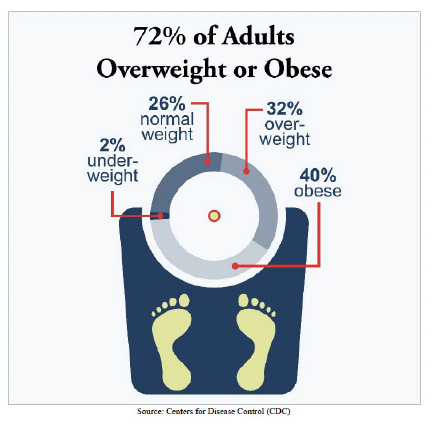
According to the CDC (Centers for Disease Control and Prevention), Obesity has now become the #3 killer in the U.S., accounting for over 500,000 deaths each year.
These four diseases account for 80% of all deaths, a total of over 2 million deaths each year.
But obesity stands alone as a killer. Here's why -
Of the four major lifestyle diseases, obesity is clearly the "most pervasive." Meaning, that it aggravates and makes worse, every other major disease and health problem - including Heart Disease, Cancer, Diabetes, Arteriosclerosis, and Hypertension. In fact, a number of studies have established strong links between obesity and more than 30 other medical conditions.
No other health condition known to man today comes close to wreaking the kind of internal systemic destruction of the body, as does obesity. Obesity is this nation's #1 health crisis and it represents the greatest threat facing the American people and the world today.
I'm Jeff Lenn, the founder of Satisfill Foods and the Satisfill Diet Plan. Satisfill has given my life meaning and purpose, and I will be forever grateful that I have been able to do something worthwhile, and really make a difference in people's lives. You can make a difference too.
In 2017, when Satisfill Foods was formed, our mission was clear - Fighting Obesity and Overweight. I want to personally invite you to support our mission, and join the fight.
By joining the fight, you can make a difference, not only in your own life, but in the lives of the staggering 72% of American adults that are struggling with obesity and overweight.
Here is how you can join the fight and make a difference -
First, become a subscription member of the Satisfill Diet Plan for as little as $15 per month, and start losing weight and getting healthy.
Second, make a donation to the Obesity Action Coalition. Since its inception in 2005, the OAC has become the nation's leading voice on obesity. Today, with more than 70,000 members, the OAC is a nonprofit organization focused solely on - raising awareness and improving access to the prevention and treatment of the disease of obesity.
To make a donation, simply go to the OAC website (link) and click on Donate.
Thank you for making a difference.
Jeff LennFounder
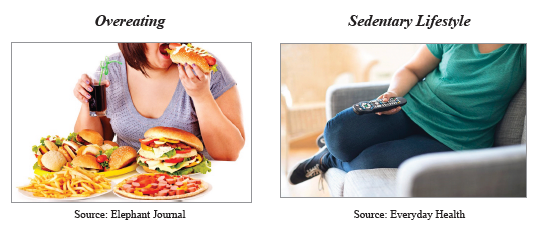
As human beings, we are hard-wired to overeat, as a survival mechanism, when given the opportunity.
As human beings, we are also prone to seek ease and comfort, whenever possible.
Tragically, life in America today has enabled us to realize both inclinations - to overeat and to take it easy - to the extreme.
On the one hand, we are overwhelmed with food - food is convenient, tasty, cheap, and available anywhere, and at any time.
On the other hand, this is the age of the -- sedentary lifestyle -- where we are moving less, walking less, and sitting more.
Both of these trends have combined to create the "perfect storm" for Obesity and Overweight, and they have become the #1 health crisis in America today.
The diet industry is huge, at over $70 billion in annual revenue. It is fueled by and thrives on two unfortunate trends. One, the constant proliferation of diet theories, books, and fads, from the recent Keto diet craze, to the ongoing debate over low fat vs low carb diets. Two, the constant demand by a gullible public for the next quick-fix, magic bullet, and miracle diet, which will save them from having to face "weight reality." In spite of these misguided trends, for over 50 years, the medical and scientific community, along with every major health organization in the country, has steadfastly proclaimed the following fundamental truth: The key to weight loss and permanent weight control is in understanding and applying the principle of Energy Balance.
Energy balance, or calorie balance, is what determines your body weight. Energy balance is simply the interplay between your energy input and your energy output. The energy balance equation looks like this -
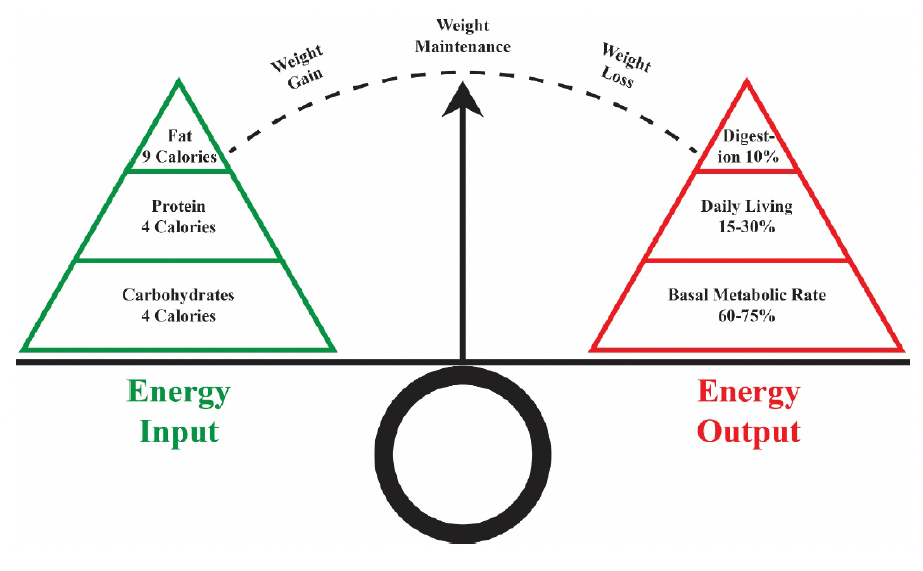
We input energy when we eat. The food we consume provides calories. Calories are simply a unit of energy or heat. The food we eat and the drink we consume provide different amounts of energy. Protein and carbohydrates each provide 4 calories per gram, whereas fat provides 9 calories per gram.
Even when you’re sleeping, your body uses energy to perform basic functions like breathing and blood circulation. The energy used for these basic functions is called your basal metabolic rate (BMR), and it makes up roughly 60-75% of the total number of calories you burn each day.
The thermic effect of food when you eat and digest meals and snacks makes up roughly 10% of the calories you burn each day.
All the physical activities that you engage in each day, like walking, getting dressed, fixing meals, your work, and of course, physical exercise, makes up roughly 15-30% of the calories you burn each day.
If you lead a “sedentary lifestyle,” as most adults do, like sitting at a computer most of the day, the calories you burn each day is probably around 15%. However, if you lead a “physically active lifestyle,” wherein your work is physically demanding and/or you engage in daily physical exercise, the calories you burn each day is probably closer to 30%.
If your energy input and your energy output are perfectly balanced, you won’t gain or lose weight – your weight will remain stable.
Positive Energy Balance: This occurs when your energy input is greater than your energy output. That is, you eat more calories than your body needs, and you store the excess energy or calories as fat. This results in weight gain. The storage of approximately 3,500 excess calories as fat equals one pound of body weight gained.
Weight Gain = Energy Input > Energy Output
Negative Energy Balance: This occurs when you burn more calories than you consume. When this imbalance occurs, your body burns stored energy (fat) in order to function. This results in weight loss. The burning of approximately 3,500 calories of stored fat equals one pound of body weight lost.
Weight Loss = Energy Output > Energy Input
Ultimately, for optimum weight loss, weight control, and overall health, you need to harness both parts of the energy balance equation. Think of it as an “energy balance one-two-punch.” To maximize weight loss and weight control, you need to do two things simultaneously –
Diet – Eat fewer caloriesExercise – Burn more calories
BMI is generally regarded as the easiest and most credible method currently available for calculating your body fatness, as well as classifying body fatness into standard weight categories. In fact, most health experts, and nearly all health agencies, like the CDC (Center for Disease Control and Prevention), use the BMI as the “Gold Standard” for accessing body fatness.
BMI does not measure body fat directly, but instead uses a formula to calculate your body fatness as a number, based on your height and weight. The other methods used to measure body fat directly are much more difficult to conduct, and more expensive, they include -- skinfold thickness measurements (with calipers), underwater weighing, bioelectrical impedance, dual-energy x-ray absorptiometry (DXA), and isotope dilution.
BMI is calculated the same way for men, women, and children. The calculation is based on the following formula: weight (lbs) / [height (in)] squared x 703
That is – BMI is calculated by dividing weight in pounds by height in inches, squared, and multiplying by a factor of 703.
Example: 135 lbs weight, 69 in height (5’9”)
Calculation: 135 / (69 x 69 = 4,761) x 703 = 19.93
Standard Weight Categories have been established by dividing the BMI numbers into four ranges, as shown below –
| BMI | Weight Category |
|---|---|
| Below 18.5 | Underweight |
| 18.5 - 24.9 | Normal or Healthy Weight |
| 25.0 - 29.9 | Overweight |
| 30.0 and Above | Obese |
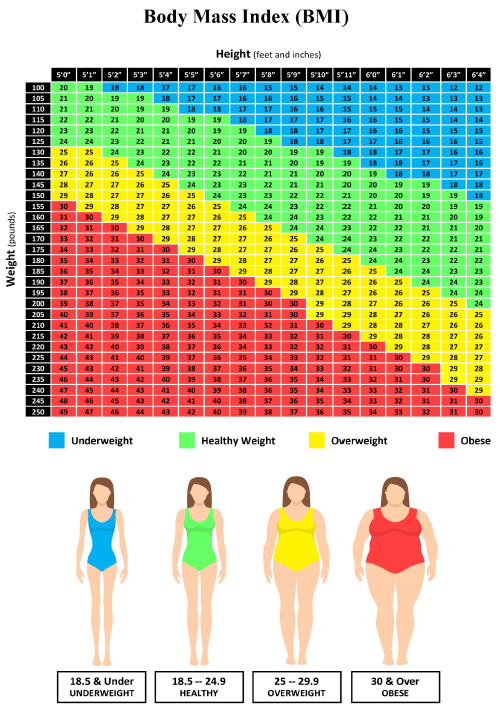
Although the above BMI calculation is fairly simple to do and is exact, there is even a simpler and more graphic way to determine your BMI number, by using one of the many BMI Charts that are available, like the one below.
Directions: To get your BMI from the chart, all you need to do is find your weight at the left, and your height at the top. Then, going right from your weight, and going down from your height, find your BMI number where the two columns intersect.
OvereatingSedentary Lifestyle
The key to weight loss is understanding the Principle of Energy Balance –
Energy Balance – Energy Input – How much you eat.Energy Output – How much you move (exercise).
Ultimately, for optimum weight control, and overall health, you need to harness both parts of the energy balance equation. Think of it as an “energy balance one-two-punch.” To maximize weight control, you need to do two things simultaneously –
Diet – Eat fewer caloriesExercise – Burn more calories
There’s a wonderful ‘synergy’ that comes into play between diet and exercise. Once you start to eat right to lose weight, you will naturally want to start exercising right to lose weight. In other words, the more you do one, the more you will want to do the other, and vice versa.
The term aerobic means “with oxygen.” Aerobic Exercise, sometimes called Endurance Exercise or Cardiorespiratory Exercise, or just Cardio, strengthens and conditions your heart and lungs. It gets your heart pumping and your lungs breathing, by engaging the large muscles of your lower body.
Here are some of the many health benefits derived from Aerobic Exercise –
We made the analogy that our metabolism is the engine that powers our bodies, and that regular aerobic exercise keeps our metabolic engine tuned up and running properly. So the question is – How much aerobic exercise is needed to “tune up” your metabolic engine?
Aerobic exercise needs to engage the large muscles of your lower body to work your heart (cardio) and lungs (respiratory) hard enough and long enough to produce what is called the – training effect – which leads to aerobic conditioning or fitness, and most importantly, which leads to a “tune up” of your metabolic engine.
The training effect is achieved by applying the “FIT” acronym, which stands for – Frequency, Intensity, and Time. To produce a good training effect, you must exercise often enough (Frequency), hard enough (Intensity), and long enough (Time). Based on our research, our recommendation for how much aerobic exercise is needed to produce an excellent training effect, and how much is needed to fully “tune up” your metabolic engine is as follows –
Getting Started – 3 to 4 times per week.
Recommended Target – 6 times per week.
Getting Started – 15 to 20 minutes.
Recommended Target – 30 minutes.
The intensity of your aerobic exercise workout refers to how hard you are working and, hence, how fast your heart is beating. All available research and data indicates that to produce a training effect, and to achieve a metabolic tune up, you need to exercise at 50% to 80% of your maximum heart rate. This range is referred to as your Target Heart Rate Zone.
To determine your Zone, start by finding your maximum heart rate using the chart below entitled Estimated Maximum Heart Rates. Simply locate your age, to the nearest five years, in the left-hand column, then locate your fitness level column, based on the descriptions at the bottom. The number indicated is your estimated maximum heart rate.
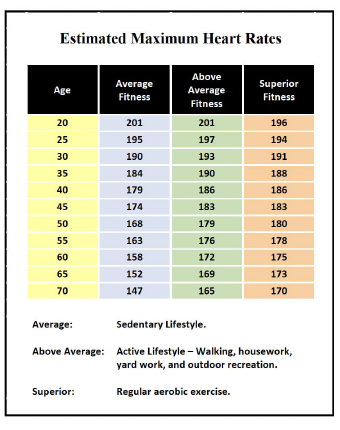
To calculate your Target Heart Rate Zone, use the following example - If you are 50 years old, with average fitness, you would have a maximum heart rate of 168.
50% - 168 x .50 = 84 Heart Rate
80% - 168 x .80 = 134 Heart Rate
Your Target Heart Rate Zone would be 84 to 134 Heart Rate
There are two primary methods used to determine your heart rate level -
Actual Heart Rate - This is an objective measure that is determined in one of two ways.
Perceived Exertion - This is a subjective measure of how hard you are working, based on how you feel - how out of breath you are, or how much you are sweating.
(SEE the Perceived Exertion Scale below.)
| How hard are you working, on a scale from 0 to 7? | Equivalent to % of Maximum Heart Rate of |
|---|---|
| 0Not at all | |
| 1Very Light | |
| 2Light | 50% |
| 3Moderate | 60% |
| 4Somewhat Hard | 70% |
| 5Hard | 80% |
| 6Very Hard | |
| 7Very Very Hard |
NOTE: We will make every effort to respond within 48 hours.
Satisfill Foods LLC
1218 7th Street, Suite A
Berkeley, CA 94710
USA
